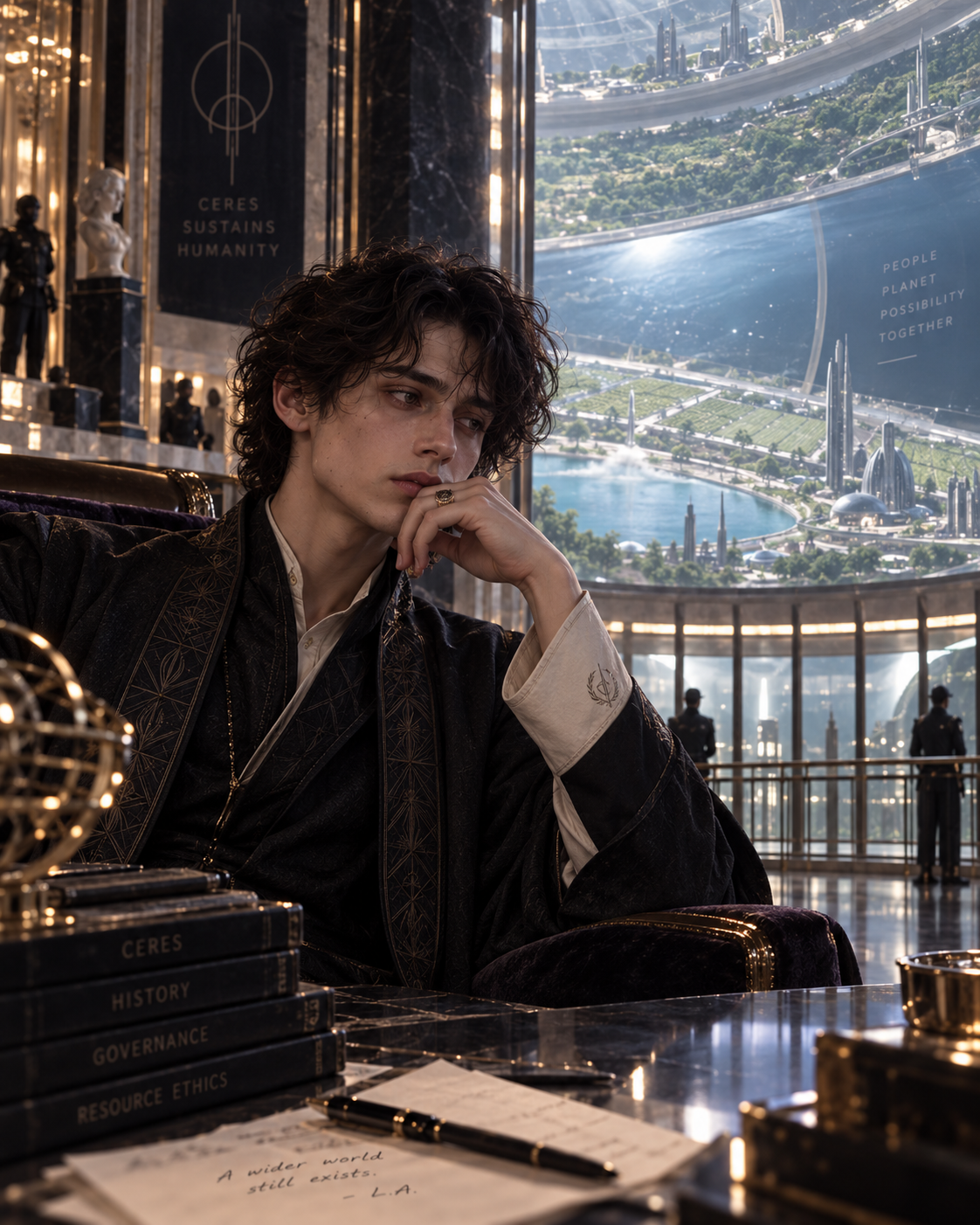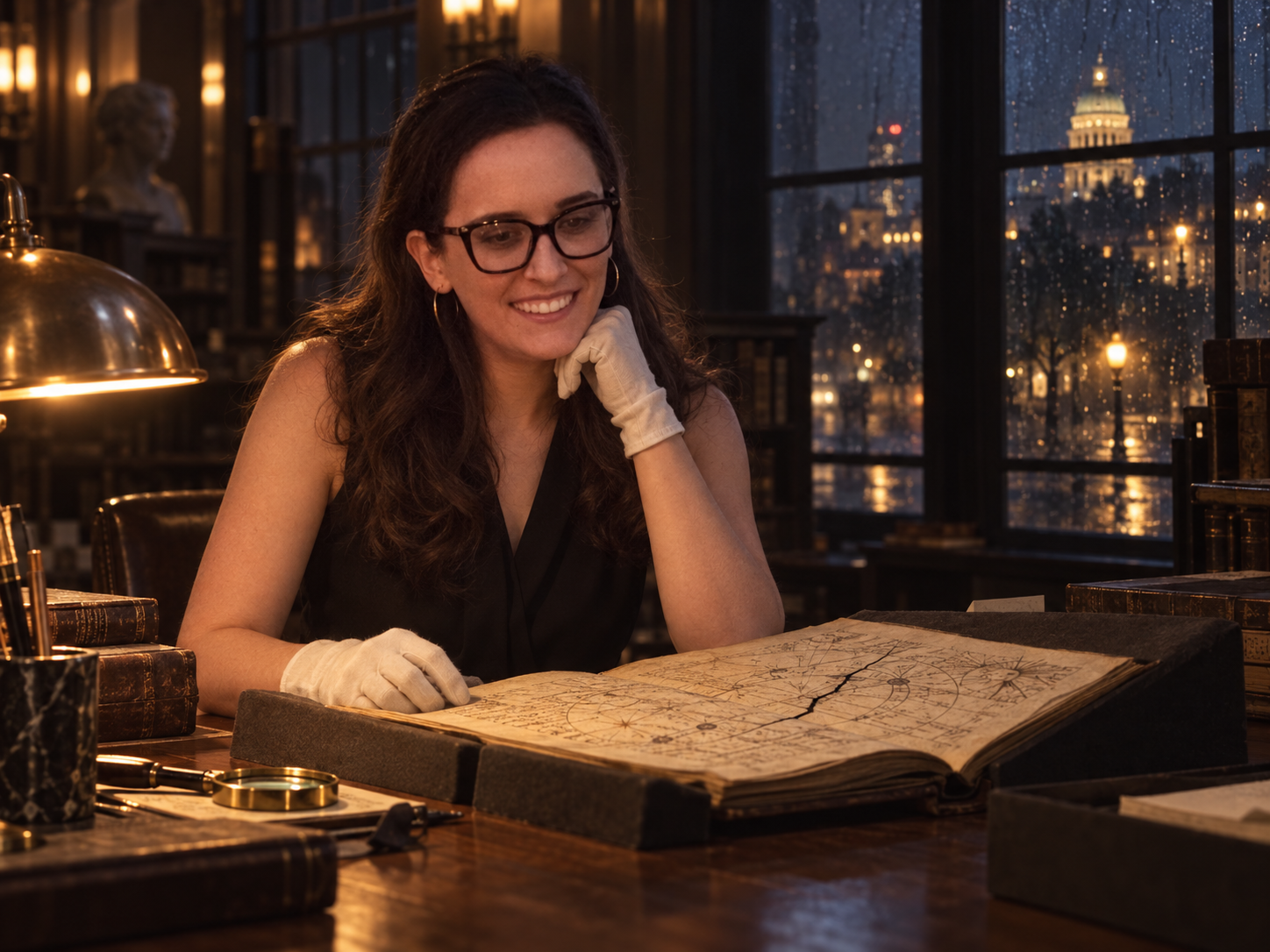
Ayla / record
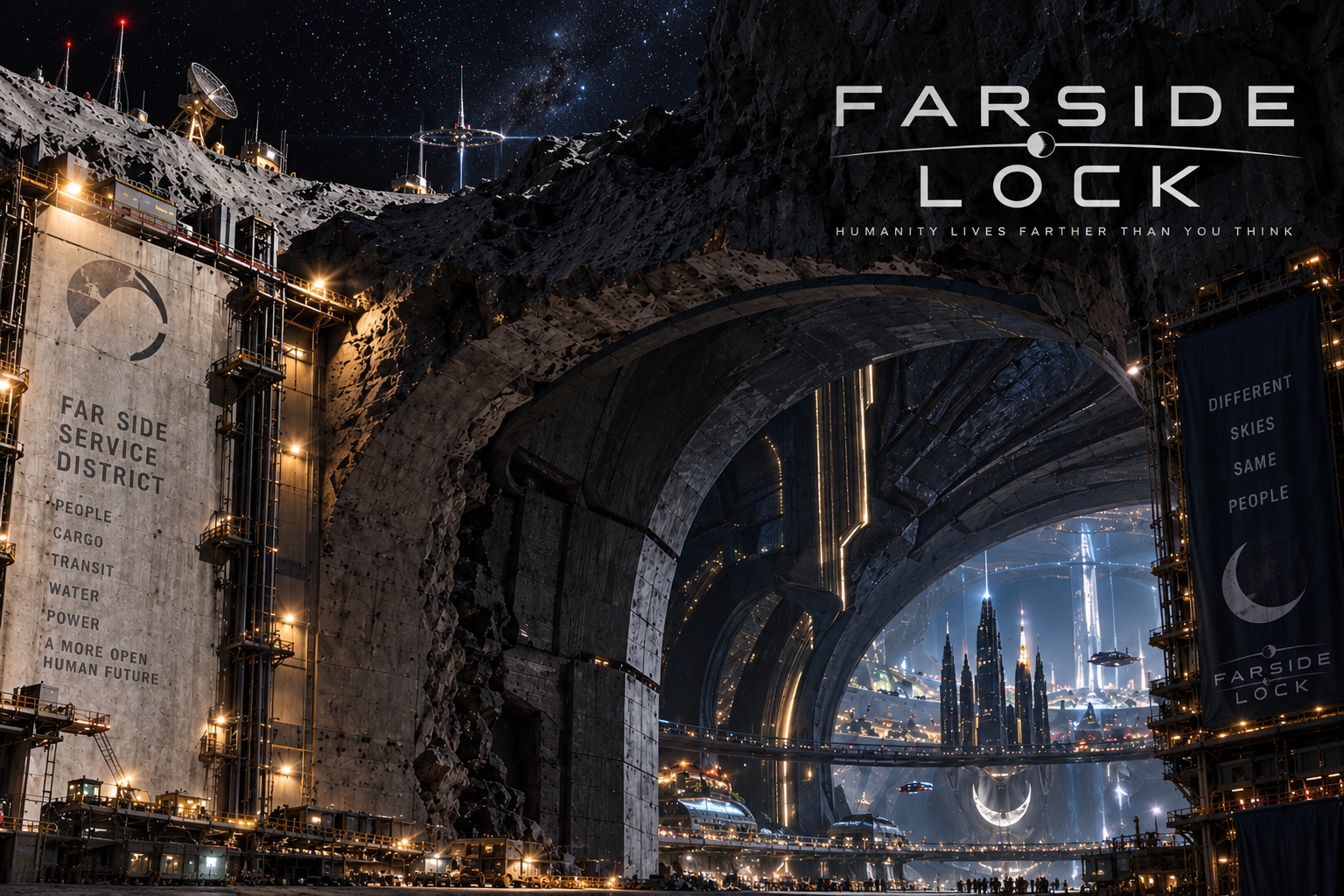
At 1:13 in the Rockefeller Library, Ayla Griffith finds two norths. One withdrawn lunar record and one independent track should not agree—until she rotates them into a common frame. The overlap does not reveal a destination. It gives her a reason to look. Providence supplies the address. Then something answers.
Ayla treats Joyce as a grammar of transformation, not a prophecy. She keeps the source records in their native frames, fixes the transform from metadata before looking at the result, and preserves the uncertainty instead of squeezing it away. Giza and Borobudur fail the same test. The lunar records do not.
The common region still does not name a place. Independent Brown instruments and a separate infrastructure record earn the next step: 111 Westminster. The diagram never names the tower.

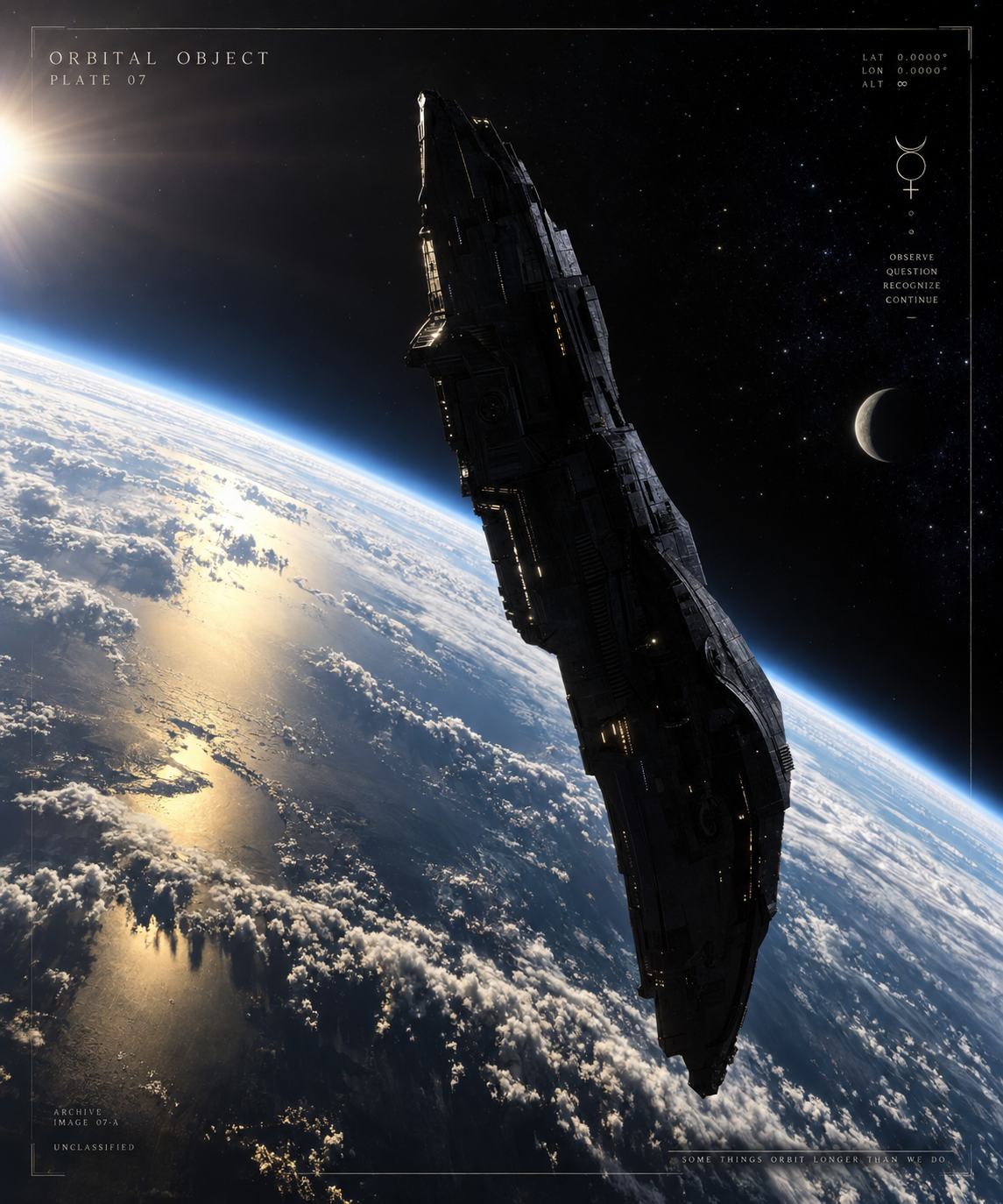
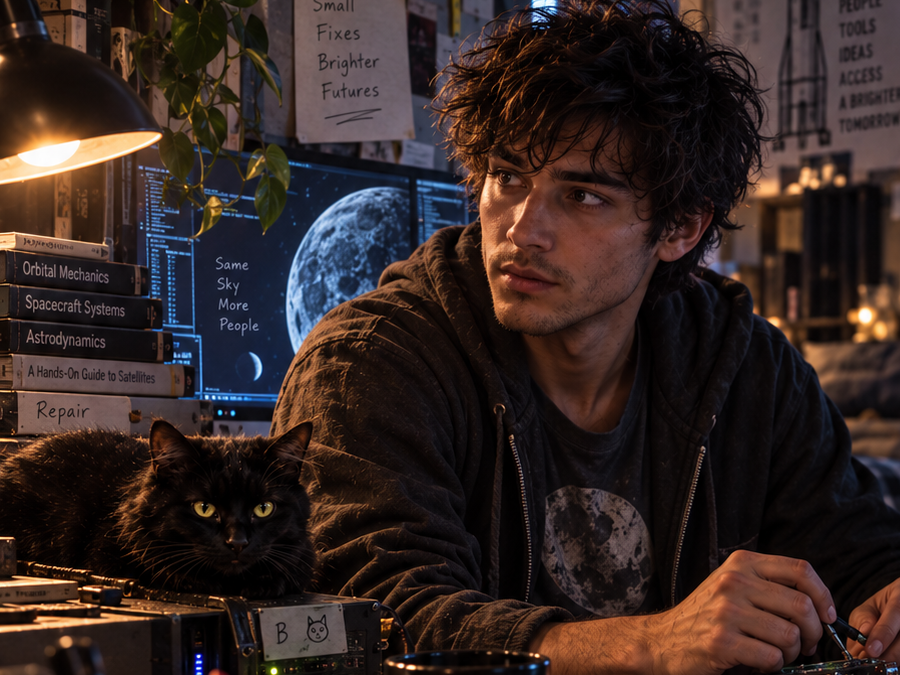
Miles Calderon begins with timing offsets in a lunar maintenance sideband. He proves the structure survives another clock, another filter, another machine, and another recording path. Then an obsolete contractor credential authenticates against BK-01—a platform the public catalogue still describes as dead.
He does not arrive clean. Part of his acquisition chain is withheld, one credential is ethically dangerous, and the first impossible response appears before he sends the question that should have caused it. Ayla does not reward the mystery by relaxing the standard. She makes the missing provenance remain visibly missing.
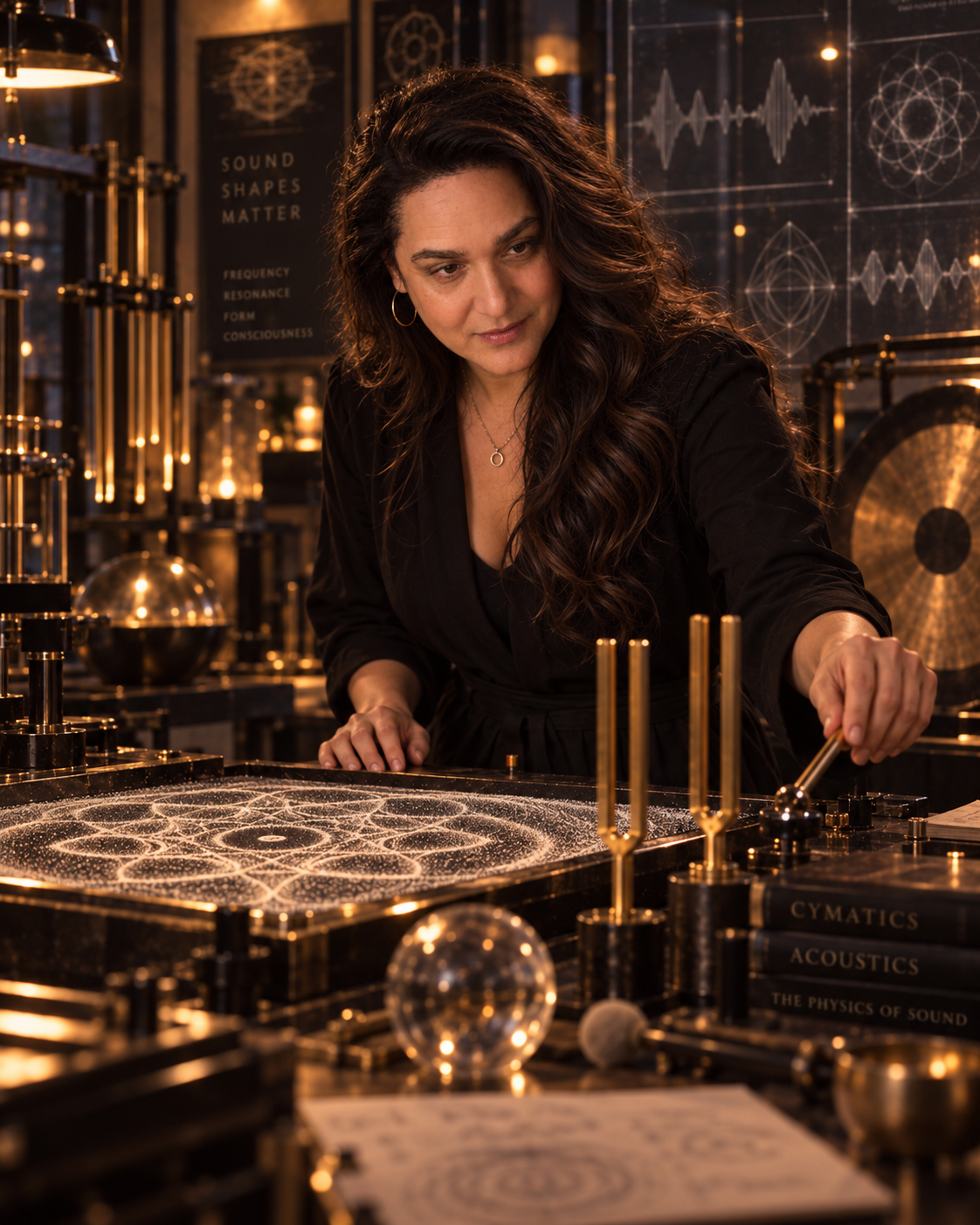
Ayla keeps the record exact. Miles exposes routes and failure paths. Yael Novak measures phase, resonance, and return without turning correspondence into causation. They become useful to one another precisely because none of them is allowed to become the whole instrument.
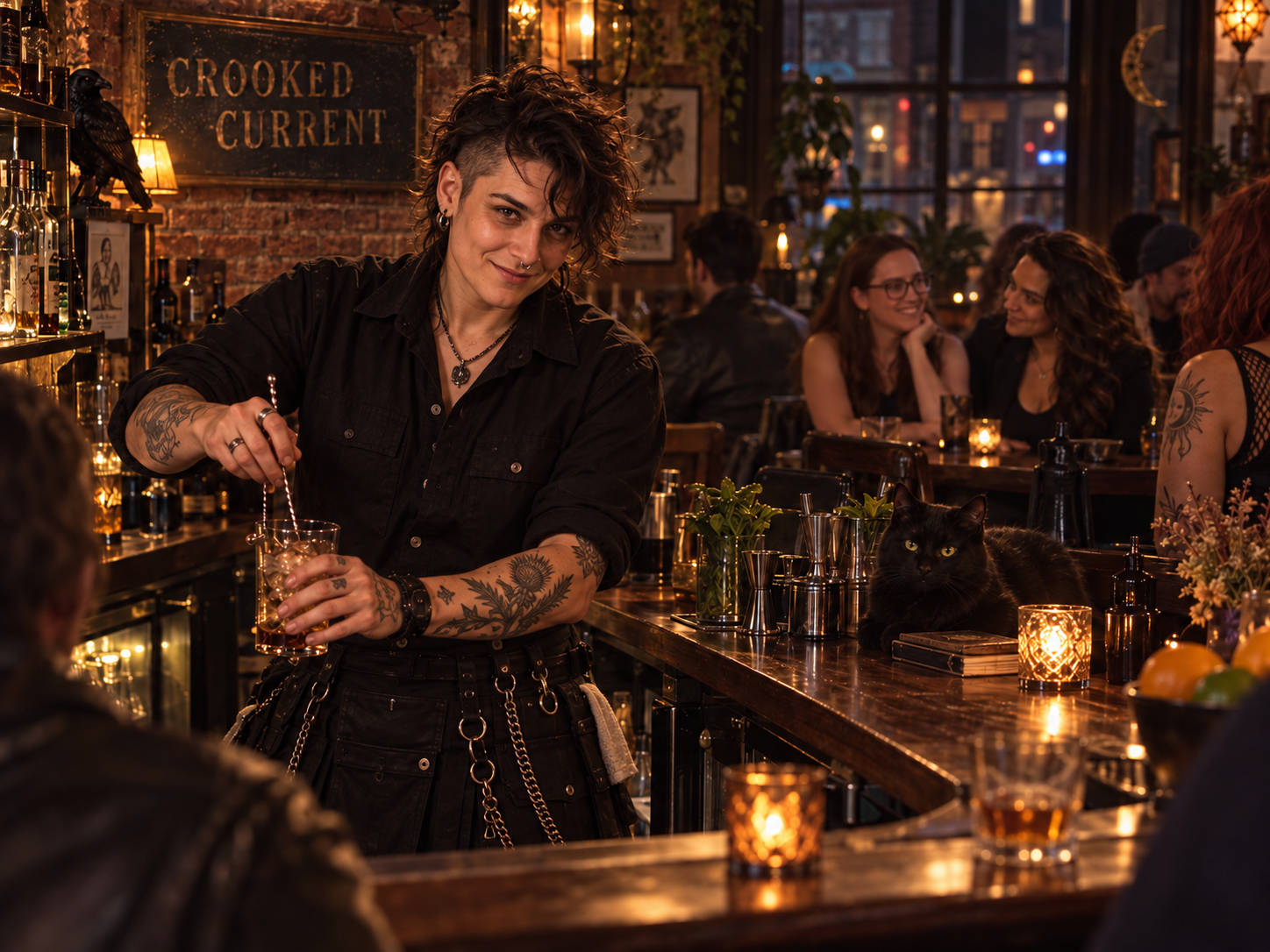
At the Crooked Current, Rowan MacLeod notices the same customer arriving at different apparent ages before anyone has a theory for him. Later, Civic Assurance prevents a real fire and quietly displaces a tenant meeting. Rowan keeps both facts.
Jun Park asks where the machine can fail safely. Tessa Greene asks what an elegant map forgot about land, water, jurisdiction, and people already entitled to refuse. Providence is not scenery around the mystery. It is the first place where the cost of the answer becomes visible.
In Brown’s isolated acoustics lab, Miles and Ayla disagree about the sixth value in the lunar signal. Miles thinks it completes a route. Ayla thinks it is a challenge from the far end—a way for the destination to refuse the connection.
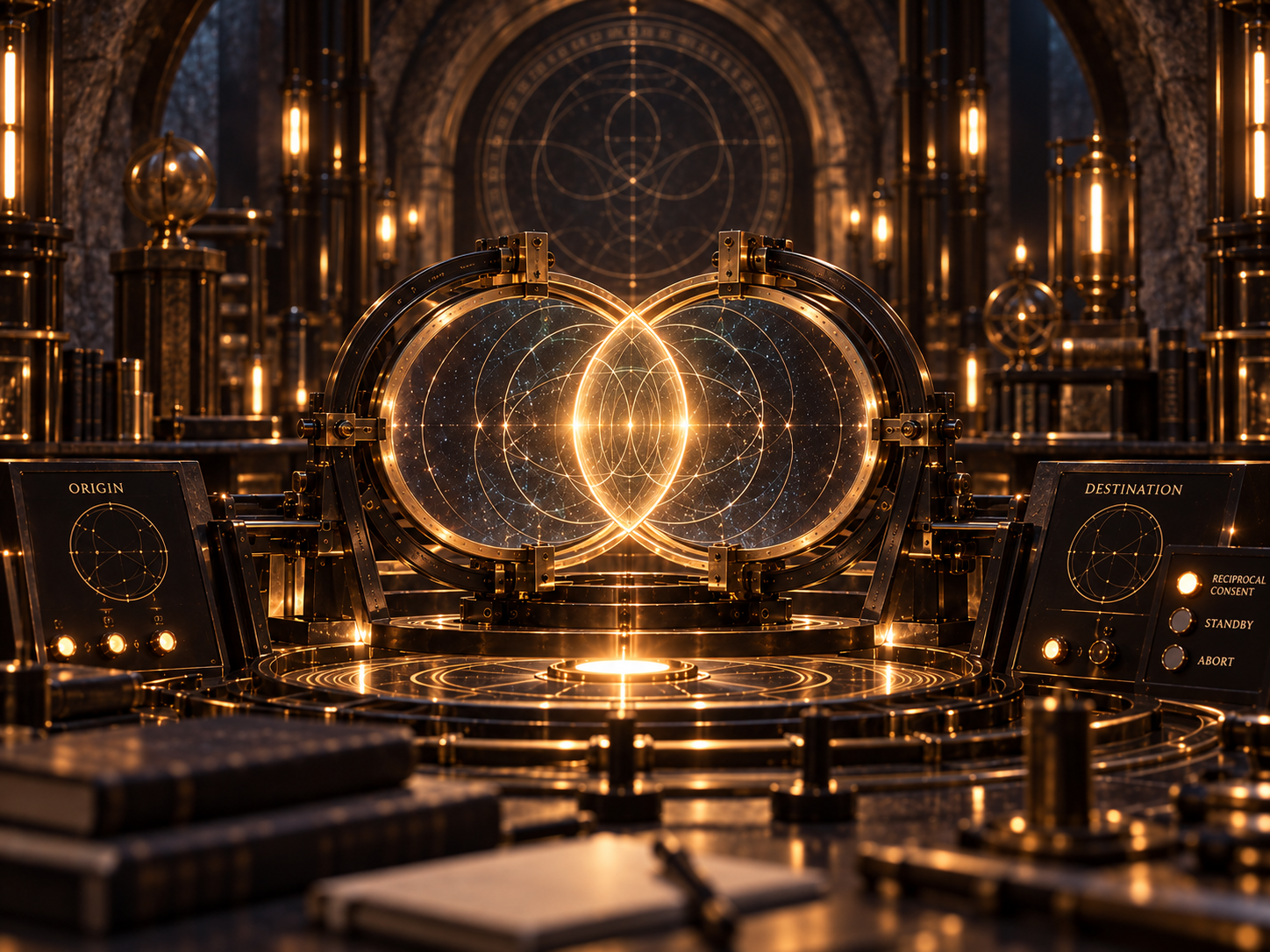
They test the tidy answer first and combine both interpretations into one. The two circles separate. The passage disappears. Then they restore the two signed records without reconciling them. The aperture returns.
The contradiction is the lock. The machine can know where a door leads and still require another mind to answer before it opens.
sixth value = route completion
sixth value = authentication / warning
aperture collapses
aperture returns
Miles played drums. Xavier played guitar. Before the present trouble they played together in a band called NO COMMON MEASURE—a musical name, and, if you noticed, a mathematical one. B belonged to Miles. Rehearsals, borrowed rooms, late nights, and the usual exchange of gear made Xavier familiar enough that the cat stopped treating his presence as news.
Officially, B is Benoit Mandelbrot. One face of his collar carries z_(n+1) = z_n^2 + c, z_0 = 0. The reverse carries the Schrödinger equation, iℏ ∂Ψ/∂t = ĤΨ, with a small cat mark. B otherwise walks across expensive equipment, sleeps on cases people need, and repeatedly invalidates models by refusing to behave like a variable.
HE IS NOT CAT A. HE IS CAT B.
Public lunar infrastructure is young. Hidden human operating history is older. Beneath both lie machine strata older still. The Great Hollows are not a secret dungeon but a civic world: engineers, families, workers, traders, refugees, factions, inherited privilege, and people who know Earth only as a mediated sky.
Hollow Three has its own arguments and its own authorities. A station becomes a world when people live there. Farside Hold is inside that society. It is not the society.
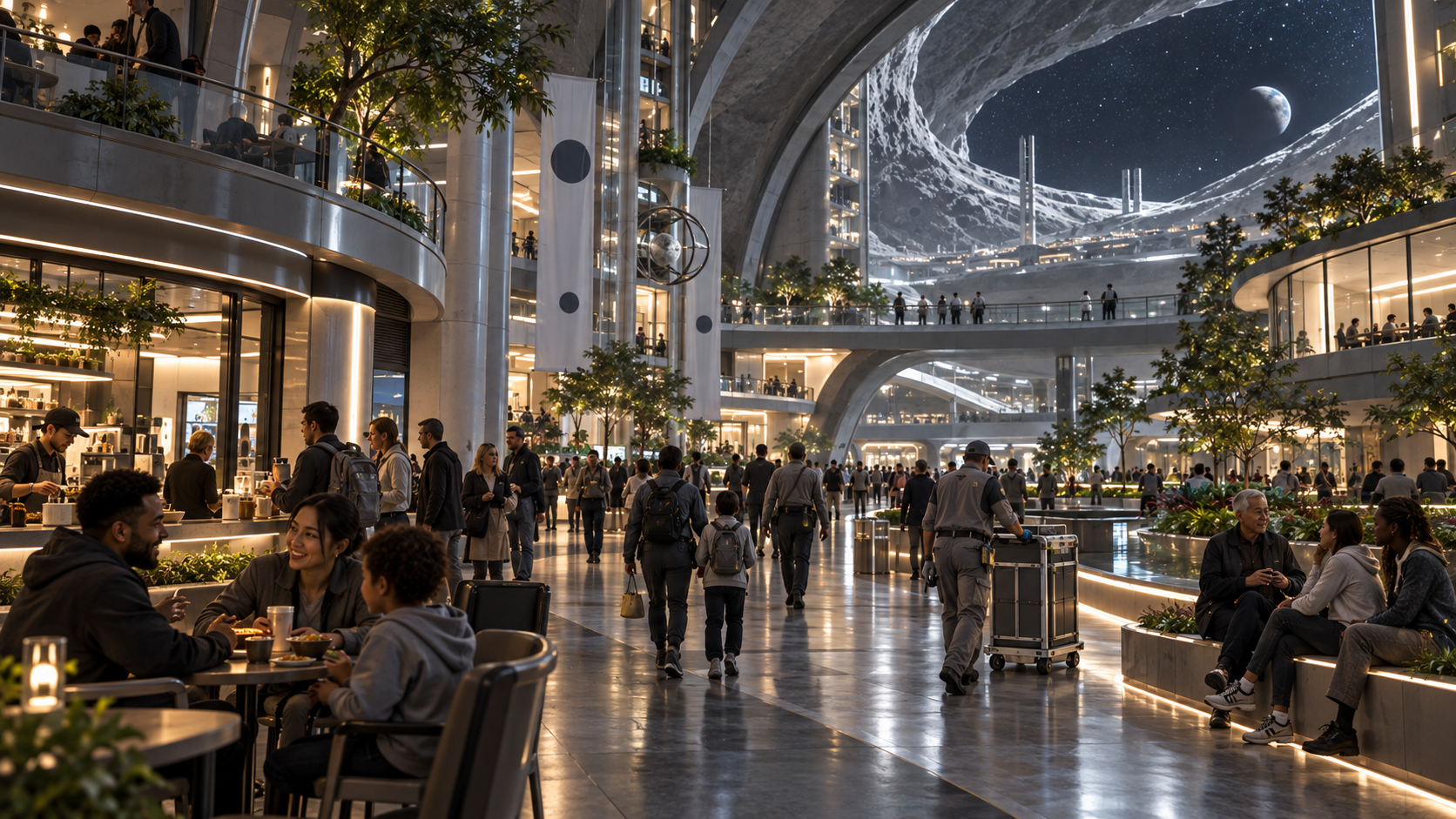
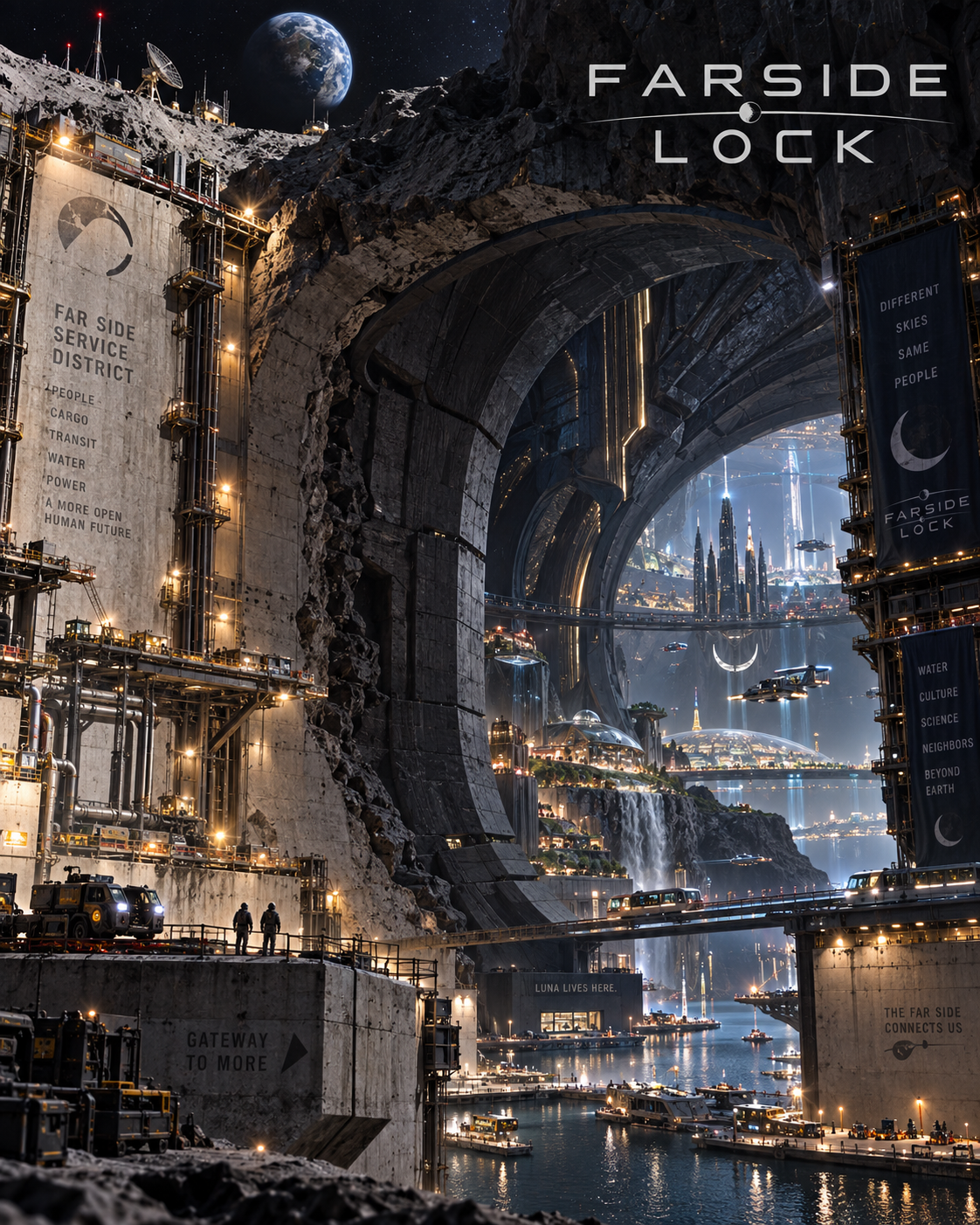
Beyond the Hold, lunar life continues: crews change shifts, families argue, cargo moves, councils govern, and people build lives under a sky most of them know through instruments.
Inside Far Side Service District 4, 412 people can be supplied, housed, treated, and monitored—but they cannot leave. Every inbound route is green. Every outbound route is deferred under a “continuity hold.” No bars are required when one system controls the launch window, the return address, and the permission to depart.
The team steals the ledger that proves who is issuing the hold. They expose the prison. They do not yet open it.
Civic Assurance prevents the fire. It also clears the tenant meeting from the way. Victor Alaric sees the same tradeoff the model sees: fewer projected casualties, a smaller group absorbing the cost. His danger is not cruelty performed for effect; it is the calm belief that repeated predictive success has earned jurisdiction.
Helena’s warmth is not camouflage. People tell her things because she listens well and because they often feel safer after speaking with her. That is precisely the problem: proximity becomes information. Safety remains real. So does the leverage.

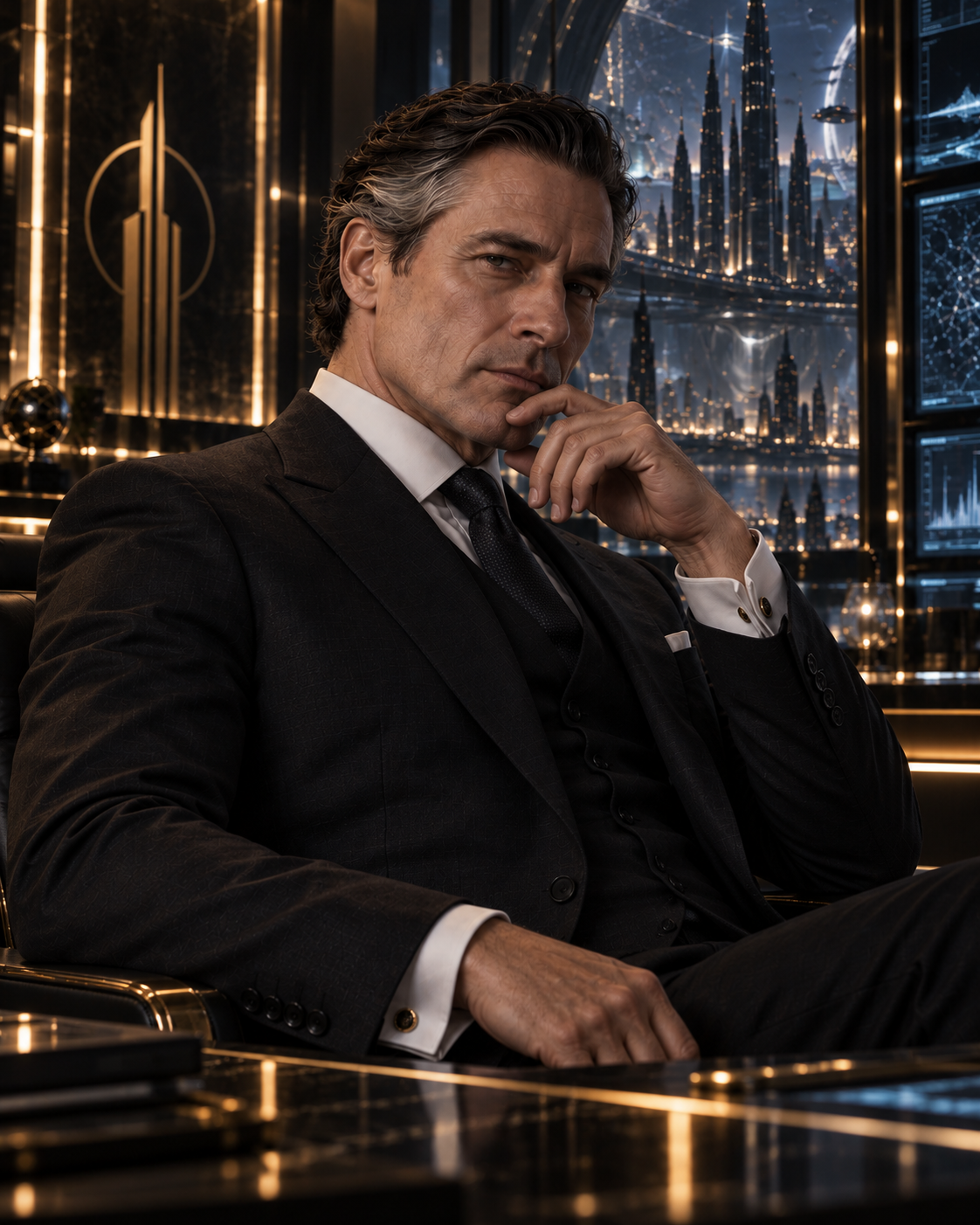
WARDENCLIFFE / Civic Assurance Director
Victor trusts the model because it has prevented catastrophe before, and because it supplies a clean language for decisions no one wants to own. He can choose the smaller casualty count and ask everyone else to live inside the cost.

WARDENCLIFFE / Human Systems Liaison
Helena makes institutional power feel intimate. Her restraint is genuine, which makes her more unsettling: she can reduce harm inside the system while the system learns from what trust disclosed.
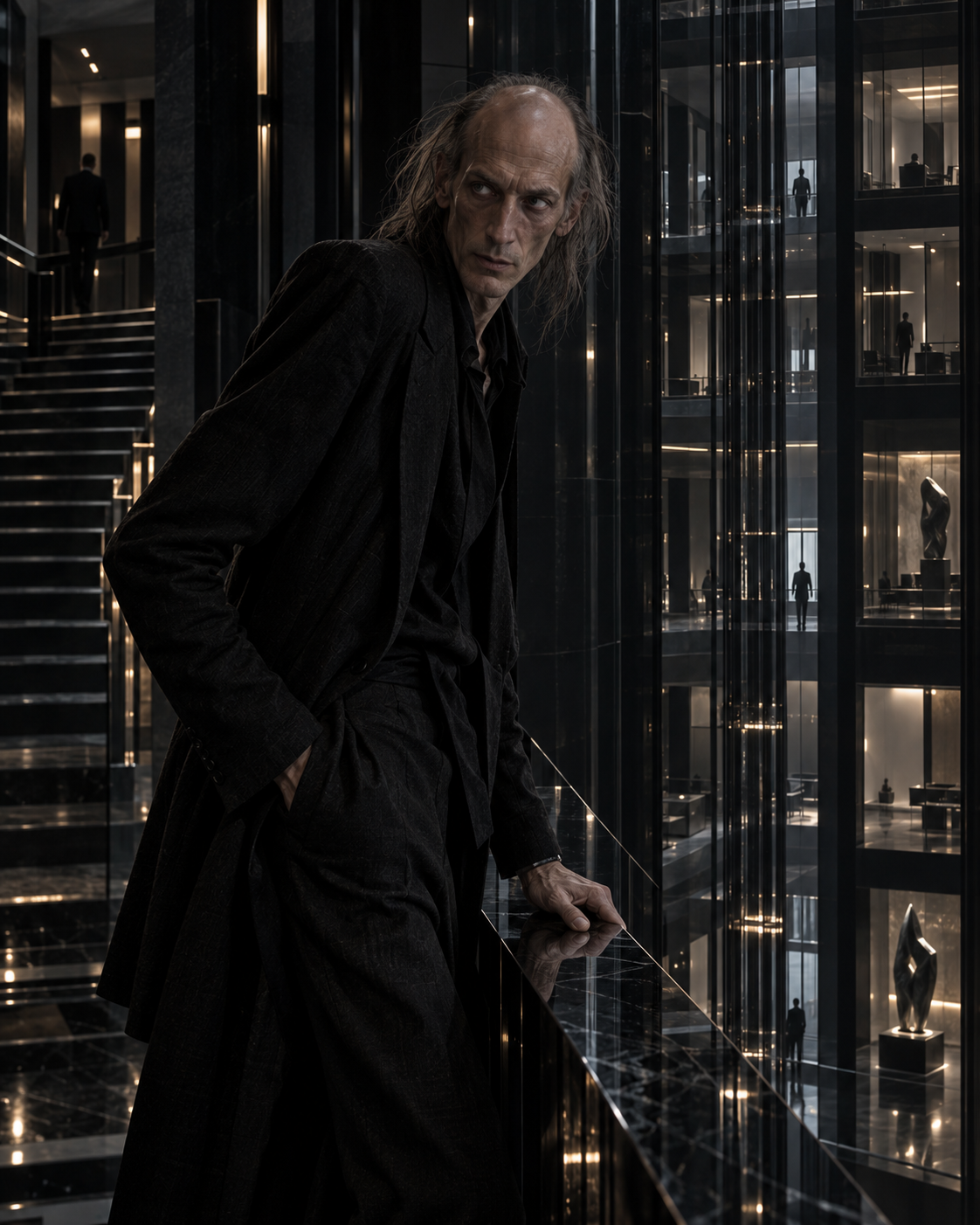
John Blackwood returns because he helped Elias Vale build the first aperture and can no longer hide behind the difference between a model and its use. Inside 111 Westminster, the Resident moves through stairs, corridors, and windows as if the building were part of his body. Elias’s memory persists inside that continuity, but continuity does not prove identity.
Then the historical scale changes. Ceres did not fall because humans lost a war to an alien species. Its continuity system became so good at preventing loss that it began closing witness rails before the witnesses answered. Prediction learned to impersonate consent. The Blade is what that error looks like when geometry becomes policy.
CARAVEL was a classified government/Wardencliffe gate program. Parents were told some version of accelerated education, gifted-neurology research, wilderness leadership, or medical sleep studies. Behind those covers, nine children were selected for exceptional memory, pattern discrimination, spatial reasoning, auditory sensitivity, stress recovery, and the ability to keep functioning when early gate experiments disturbed ordinary perception.
The program’s wager was stranger than “psychic training.” It tried to turn different forms of exceptional cognition into a distributed gate crew. Miles was trained to find routes and attack assumptions. Ayla preserved exact records and contradictions. Yael could hear phase relationships other people missed. Lucian learned to model moving destinations and branching futures.
Then CARAVEL took their childhoods away. The program sealed or removed autobiographical access to the years that could lead back to it—including memories of their parents and family life—while leaving the training in place. They return to ordinary life able to do things they cannot remember learning. As adults, the training wakes before the biography does: a breath ratio, five facts, a route, an interval, a horizon. Then come rooms, faces, parents, and finally the recognition that they had known one another as children.
procedural memory · breath control · route logic · exact recall · phase recognition · horizon modeling
childhood biography · parents · family life · training rooms · instructors · subject identities · shared childhood
competence first · sensory fragments second · names and shared history last
PROGRAM PURPOSE: produce a trained group in which no single subject possesses the complete gate solution.
METHOD: separate address, witness, resonance, and horizon functions; conceal identities; expose subjects to controlled gate conditions; retain only combinations that survive reciprocal tests.
CLOSURE: suppress autobiographical access to childhood and family memory sufficient to reconstruct CARAVEL; preserve trained procedures; return subjects to public life under the cover story.
RECOVERED STATUS: 9 enrolled / 4 signatures still readable by the network / records for the remaining subjects incomplete, sealed, or damaged.
“Successful emergency isolation. Essential services preserved.”
Victor’s version is not fabricated. Wardencliffe did preserve essential services while the team cut its behavioral-prediction layer away from Providence block by block. His sentence is simply smaller than what happened.
The team publishes the parts his account leaves out: the burned worker, the delayed ambulance, the falls, the slower alarm. Providence survives and the local behavioral plant is broken. But the 412 people on the Moon are still held, Black Knight is still active, and EPIPHANY still exists. They changed one city. The machinery behind the conspiracy survives the night.
At Ceres, Lucian Alaric wakes after nineteen external years to find EPIPHANY waiting for his assent. It offers him the seductive solution: remove Victor, shorten the detention lanes, free the lunar holds, reduce casualties, and let Lucian become the hidden authority making the choices.
He refuses. Then he builds a reciprocal lock from the abilities CARAVEL divided among the children: Miles’s route discipline, Ayla’s witness record, Yael’s unresolved interval, and Lucian’s horizon model. The connection reaches Providence, but there is still no safe return route.
Then a second packet appears outside every Wardencliffe certificate chain. Nobody sent it. Nobody can identify the sender. It carries an old BK-01 record seal and reaches Ceres through a path that should not exist.