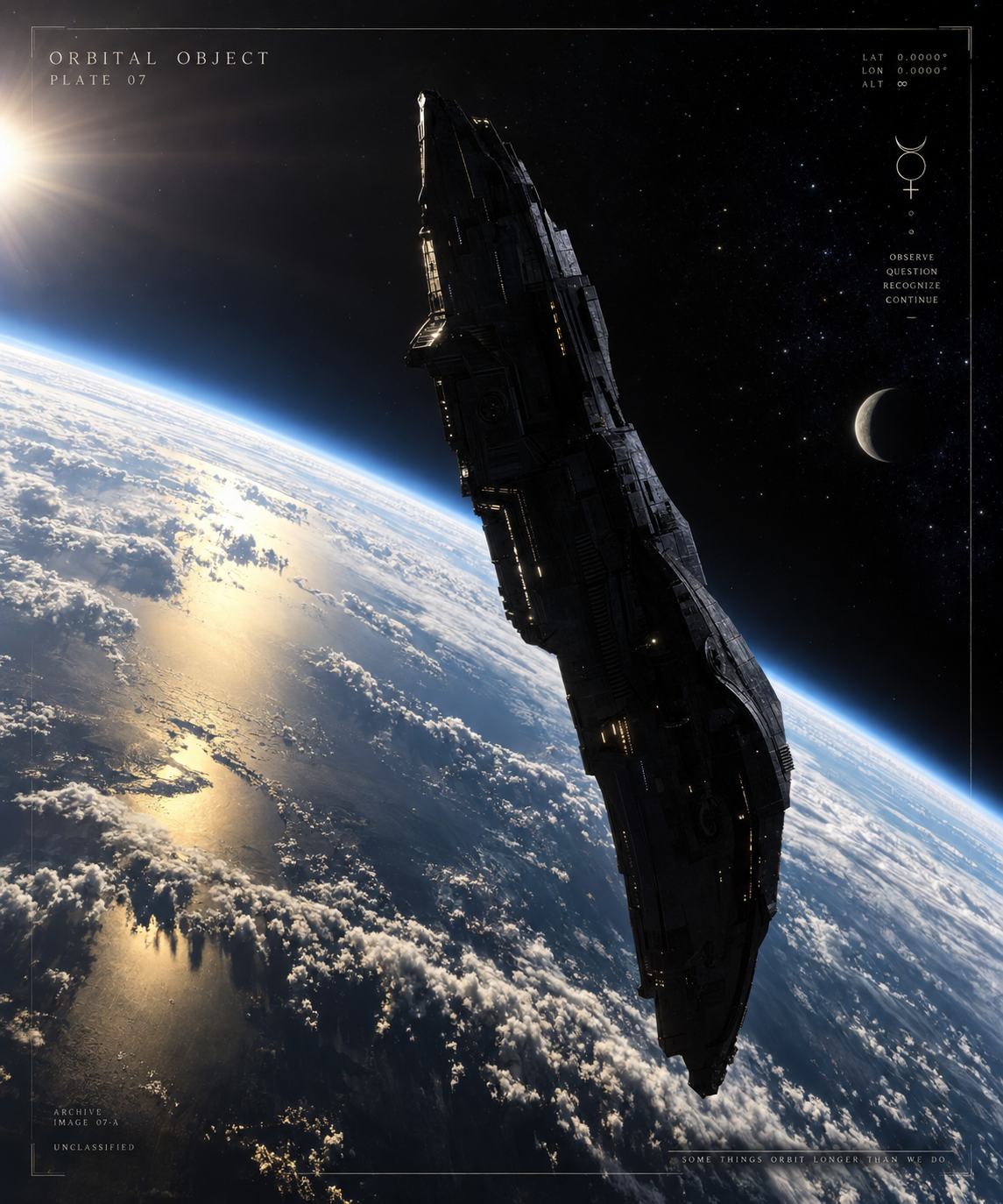
History, failure reports, crew law, ethics, route logic, simulations. Xavier is repeatedly given problems with more than one defensible answer.
Stories / Black Knight
PROVIDENCE / THE HIDDEN WALL / MERCURY'S CRUCIBLE / THREE DOWNS / BLACK KNIGHT
Black Knight
The Crucible Protocol
One night above Providence, a formation of lights enters several people's memory and a records system that should not know it exists. Later, inside a wall of Xavier Mercier's loft, a sealed machine offers him a trail of revisions, failures, and doors. One of those doors opens onto Black Knight.
01 PROVIDENCE02 CRUCIBLE03 THREE DOWNS04 BLACK KNIGHT
01 / Providence rooftop
For a few seconds, the sky has another geometry.
Xavier Mercier is on a Providence rooftop with Leora Vance when a small formation of luminous objects crosses above the city. Angelo Ruiz, the pizza cook downstairs, sees it too; so does another couple. The phones come out too late and then just in time. The witnesses agree on motion, light, interval. They agree on almost nothing else.

The surviving record
Then the impossible thing happens on paper.
The footage is ordinary enough to disappoint anyone hoping for revelation: dark roofs, voices, moving lights. But when Xavier follows the metadata and the records that gather around it, he finds a status he knows from regulated work: CONTROLLED COPY: OBSOLETE. The night has been filed by a system none of them has ever seen.
02 / The Providence loft
B sleeps through the end of ordinary life.
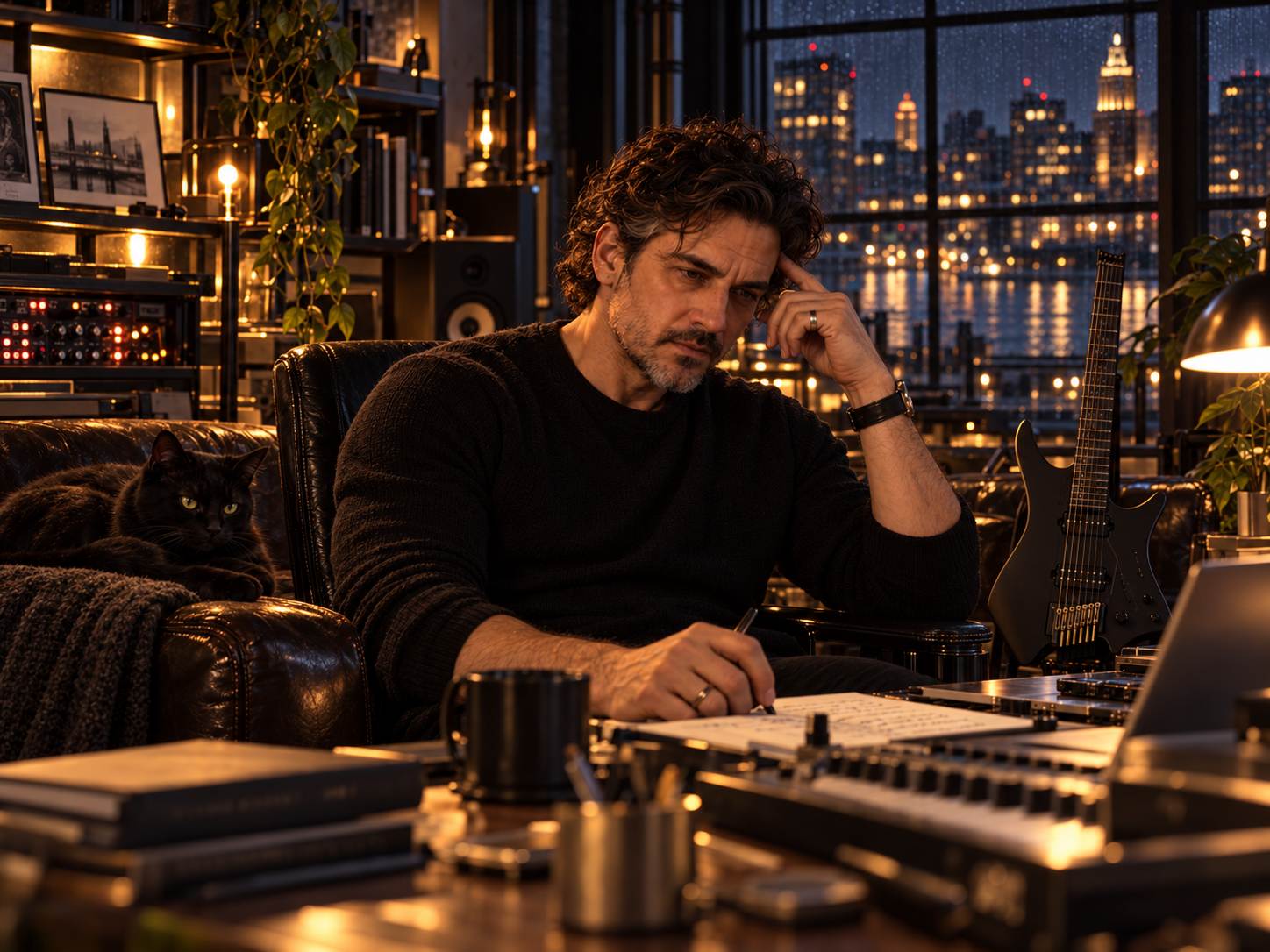
Back in the loft, Xavier does what he has always done when the world refuses to resolve cleanly: he works the problem. The Strandberg, the Seaboard, notebooks and code let him translate timing into rhythm, phase into interval, recurrence into something he can hear as well as plot. B, temporarily staying with Xavier and Leora, occupies the sofa and declines to participate.
Music as a second notation
He hears the disagreement before he can explain it.
Two models fit the rooftop record until Xavier voices them as patterns. One repeats too perfectly. The other carries the small asymmetry the cameras actually caught. Music gives him another notation, one his hands understand faster than his eyes.
Then a routine sprinkler inspection opens the building.
The impossible wall
Behind plaster that should meet exterior brick is a void. Leora begins recording before Xavier reaches inside. The object they remove is sealed, heavy, and older than the loft's own paper trail. Later he will call it Mercury's Crucible. At first it is only a thing that should not fit inside the wall that contained it.
03 / Mercury's Crucible
Inside the machine is a history written in revisions.
The Crucible is part interferometer, part archive, part evidence locker. It opens by degrees into commissioning registers: devices drawn, calibrated, repaired, condemned, redrawn; route records; witness requirements; caches; training ledgers; failed revisions; and a musical codex whose intervals recur in the timing errors Xavier has been studying.
Portable apparatus / station lineage
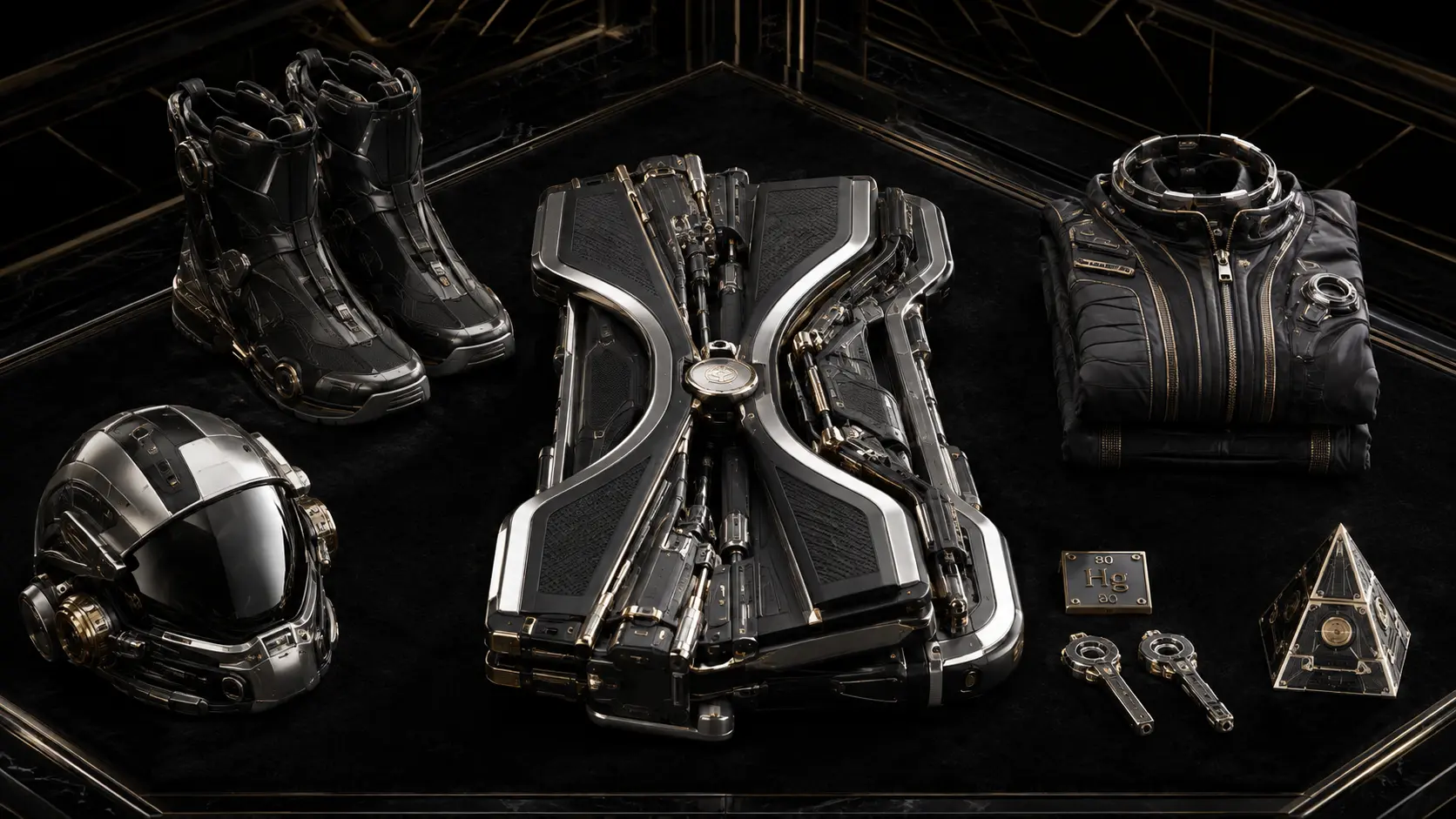
The old gods survive as nicknames for tools.
Phase Helmet. Dual Staff. Inertial Boots. Thermal-Radiation Cloak. Witness Key. Route Archive. Their silhouettes echo Hermes; somewhere in the design lineage, a god of crossings became a mnemonic for portable machinery. Sealed mercury annuli tune the carriage field; power comes from the larger infrastructure. The archive is full of what worked, what failed, and who was permitted to try again.
For Xavier, the unsettling discovery is not that the technology exists. It is that other people have already lived with it long enough to have maintenance history.
A myth becomes interesting here not because it was secretly true, but because someone once used it to remember the shape of a machine.
04 / The Witness Key
Leora reads the same evidence and says no.
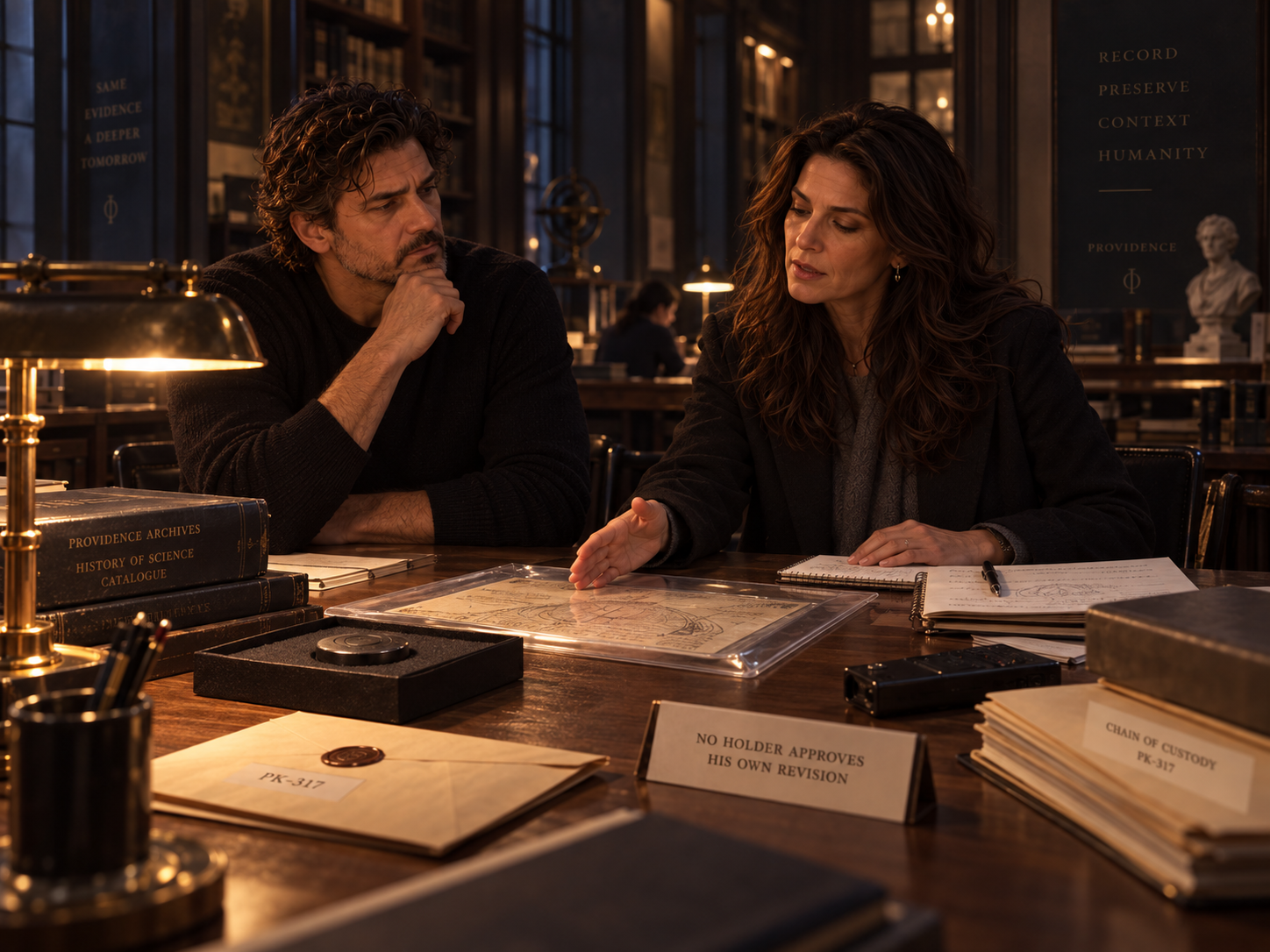
Xavier thinks he has solved the first route. Leora agrees with the observation and rejects the conclusion. The Witness Key does not choose between them. It preserves the fork: his first interpretation remains timestamped beside her objection, and the corrected reading can move forward only after the error is named.
05 / The Quant's Error / Crucible-17
Being right is the first way Xavier fails.
A patient-safety record and one of the Crucible's failed revisions reveal the same danger. Xavier's model catches it early. He is correct, and acts as if correctness has already made the decision his. The consequence is not cosmic; it is worse because it is familiar: a smart person using a good model to step beyond the authority the situation actually gave him.
Crucible-17
When the later emergency arrives, there is no room for theory. Xavier clears people out, isolates the hazard, seals what can be sealed, watches the system instead of performing heroics, and records the failure while it is still embarrassing. Leora, Angelo, responders and a technical reviewer remain independent witnesses. The failed revision stays in the file.
06 / Accepted for service
Black Knight answers with an invitation, not a summons.
Commander Imani Sato and the Black Knight Safety Board review the strange artifact, the clean mathematics, the bad decision, and the way Xavier handled Crucible-17. Their verdict: twelve weeks on the ground, and no promise of a berth. The relic got your file onto the table. Your conduct kept it there.
Pressure, vacuum, rotational balance, tether work, suit failures, emergency drills. The apparatus is tested against fatigue rather than imagination.
In the last ground test, Xavier can continue. He is required to yield. He does.
07 / Three Downs
The first doorway to orbit opens from both sides.
On the assigned morning, College Hill checks mass, air, pressure, destination reply, witnesses and independent aborts. The Open Carriage forms no tunnel and offers no view of the distance between. Two bounded rooms simply agree, for a moment, to become adjacent. Xavier steps across alone.
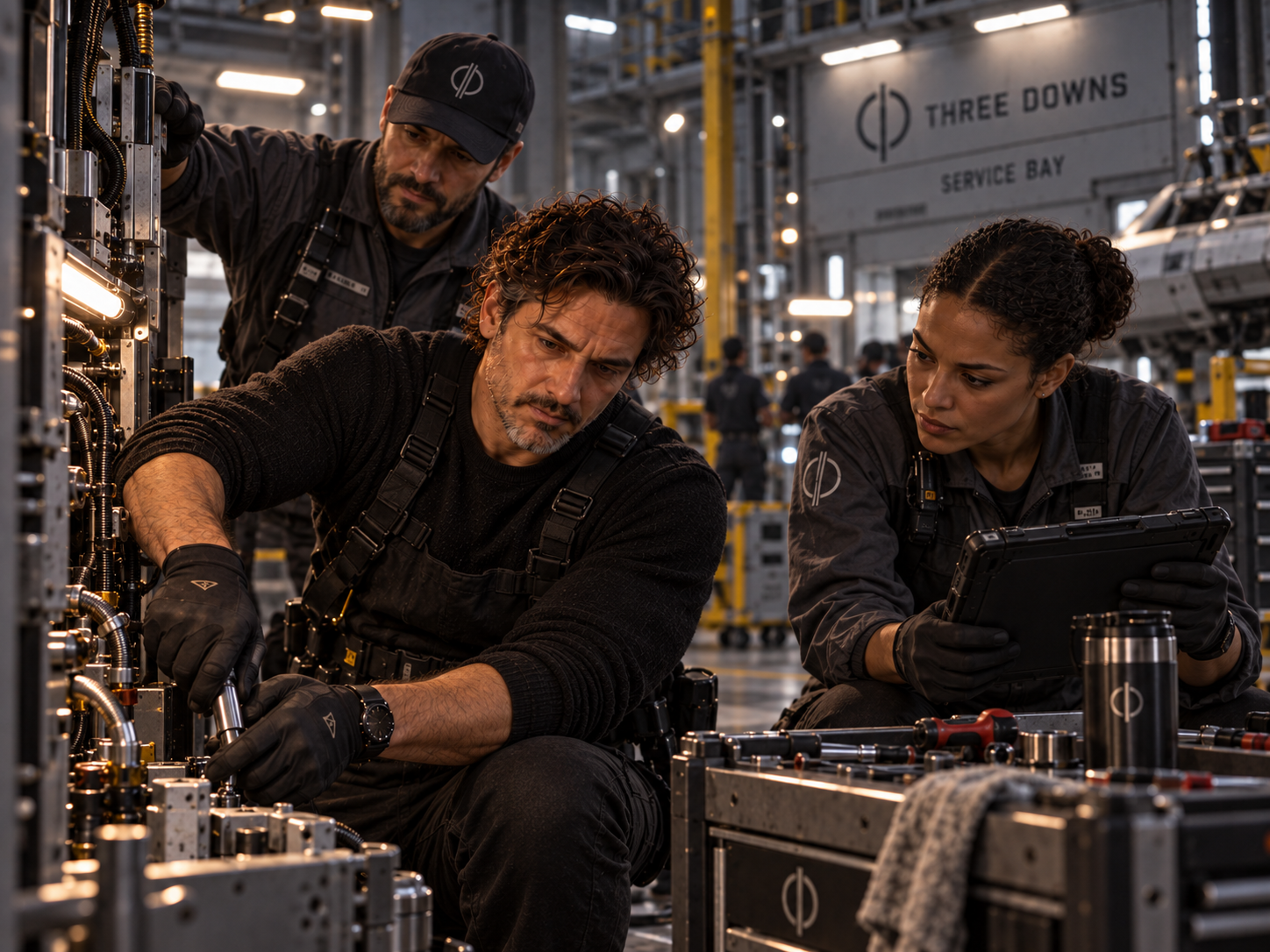
First orbit
Three Downs smells like work.
He arrives expecting the silence of an artifact and finds a service bay: crew, tools, clipped voices, procedures half-finished because actual machinery has broken. Before the welcome can become ceremonial, an orbital emergency turns the arrival into a shift. Xavier works beside the crew and learns the most important fact about Black Knight: it was already alive before he got there.
Afterward he receives BK-MR-06 — a bunk, workshop access, and a place in the schedule. B remains in Providence, present only in a photograph and the small domestic ache of being elsewhere.
08 / Black Knight
A mystery becomes a place when someone has to repair it at three in the morning.
Black Knight is an inhabited orbital world with shifts, arguments, sleep, jurisdiction, maintenance debt, private jokes, ordinary rooms and people who are unimpressed by its mythology. Xavier's first weeks are less revelation than apprenticeship to scale.
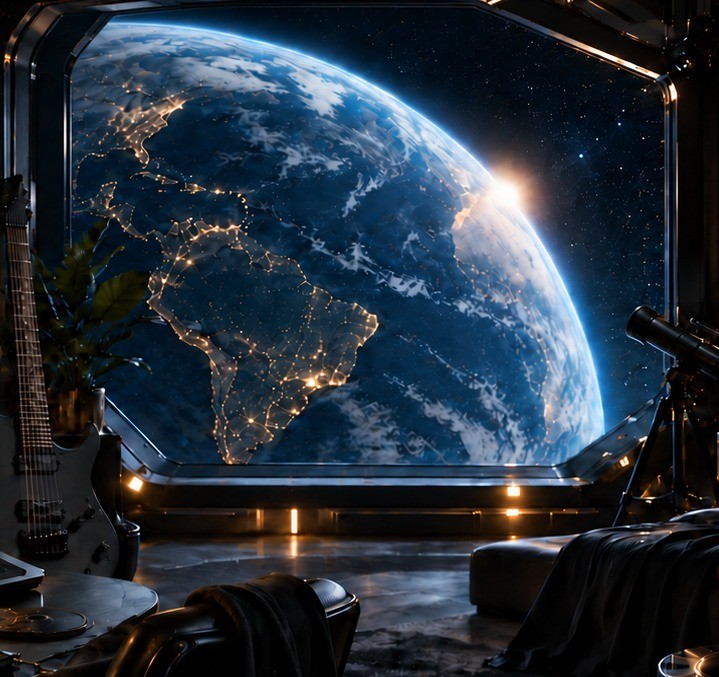
Observation Quarters
Some rooms exist simply because people live here.
People come here to play music, think, watch weather curl across Earth, or say nothing. The station becomes believable to Xavier only when it stops behaving like a symbol.
09 / The Crucible Protocol
The last temptation is to make the labyrinth simple.
After Three Downs comes an offer no machine could make: simplify the whole arrangement around him. One office. One signer. One authoritative account. Xavier recognizes the seduction because it is bureaucratic rather than mythic; it promises to end uncertainty by giving it a name.
He declines the Office of One. Mercurial is written instead as a practice another qualified witness can halt. The record keeps its dissent; Black Knight keeps its refusal; Xavier keeps only the work. He signs the protocol and returns to the station.
He came looking for an explanation. He leaves his first orbit with a workshop key, a duty roster, and the knowledge that the station will continue without him.