Mercury's Crucible
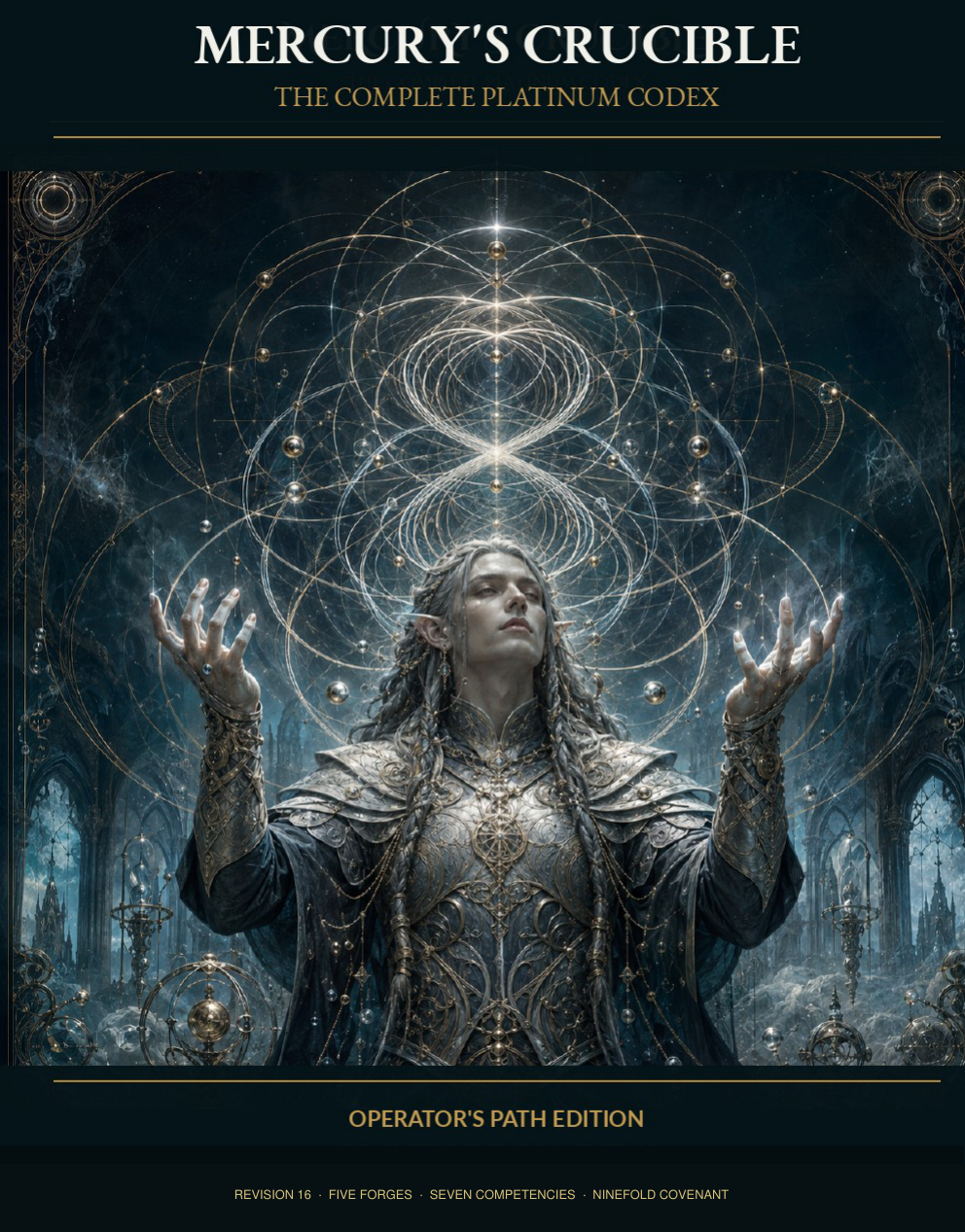
Five-Forges composition architecture presented as a forged codex: structure, score identity and transformation remain central. The Five Forges belong to the work's composition architecture, not to a playlist.
The authored-work chambers remain separate from the six visitor-operated instruments. The Conservatory foyer now asks the visitor to choose a destination rather than encounter these rooms by accidental scrolling.
Five authored works remain distinct from the visitor-operated instruments. Enter a chamber for the work, its score, and its present performance state.

Five-Forges composition architecture presented as a forged codex: structure, score identity and transformation remain central. The Five Forges belong to the work's composition architecture, not to a playlist.

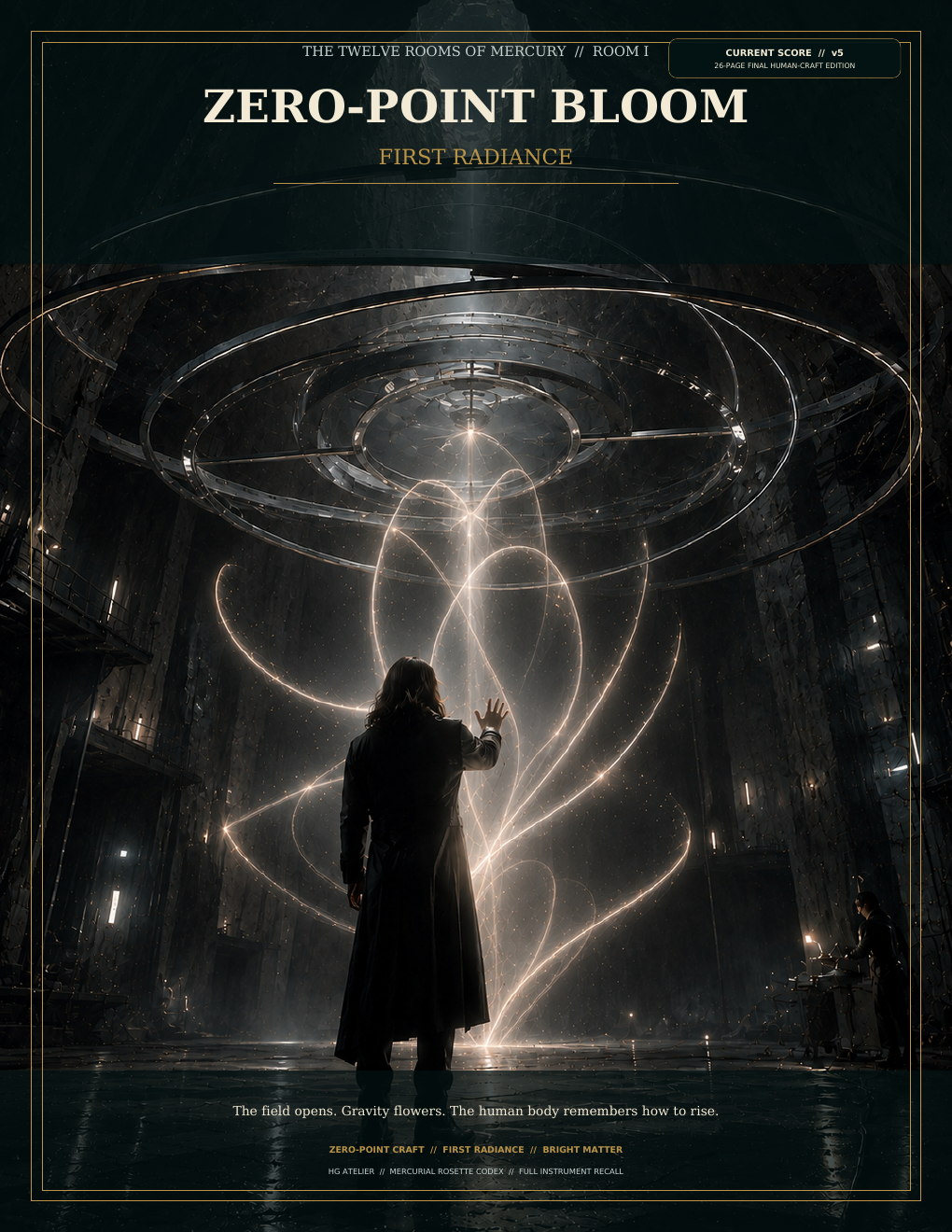
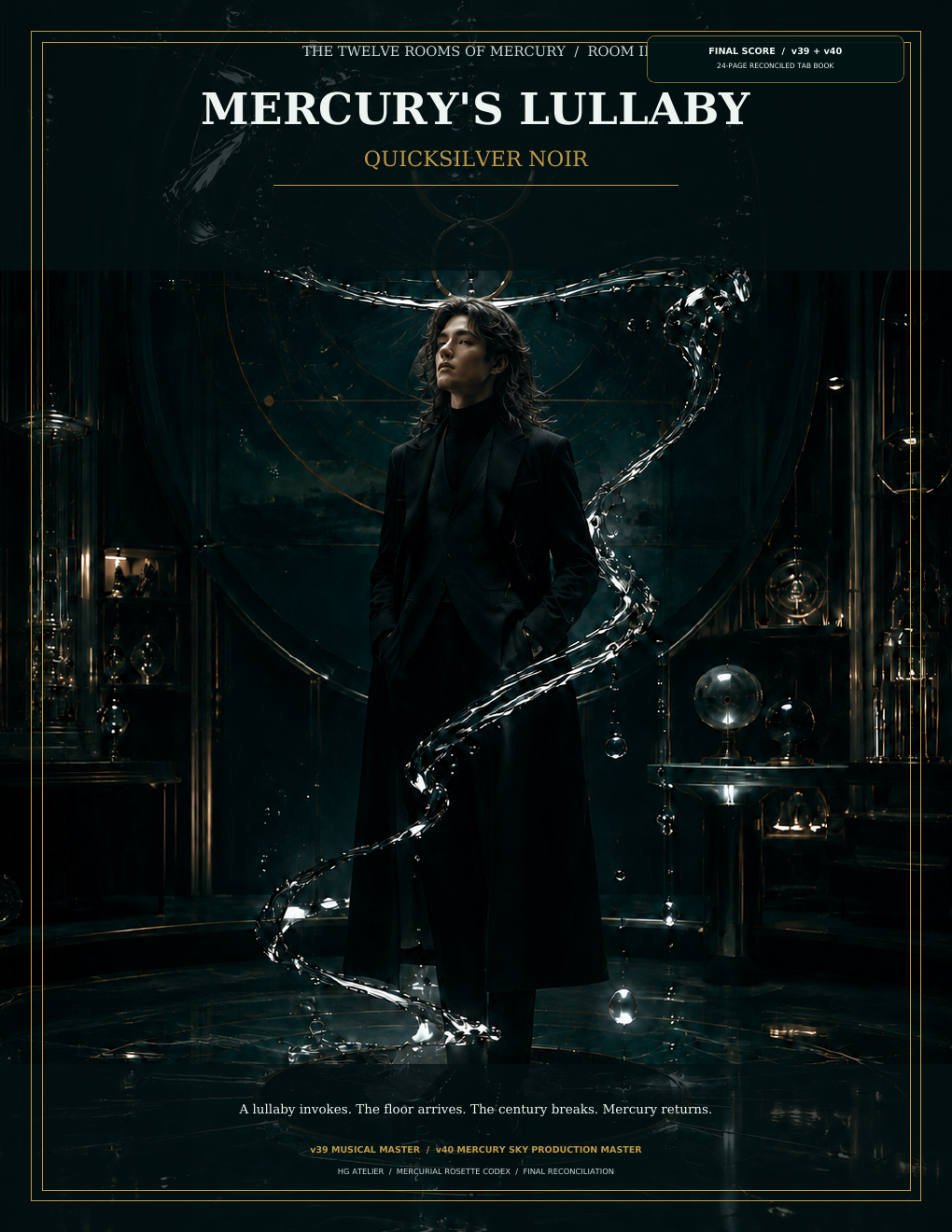
A resolved authored work presented with unusually low interface chrome: liquid mercury, smoked glass and quiet nocturnal detail. Final state is visible without inventing a public recording.

The musical text is sealed. Any bounded production-completion activity remains separate from the central object and is not presented as an open composition state.

A living but controlled work: current play-test and capture state is shown as intentional rather than unfinished. Structure may be inspected; the visitor is not invited to edit the composition.

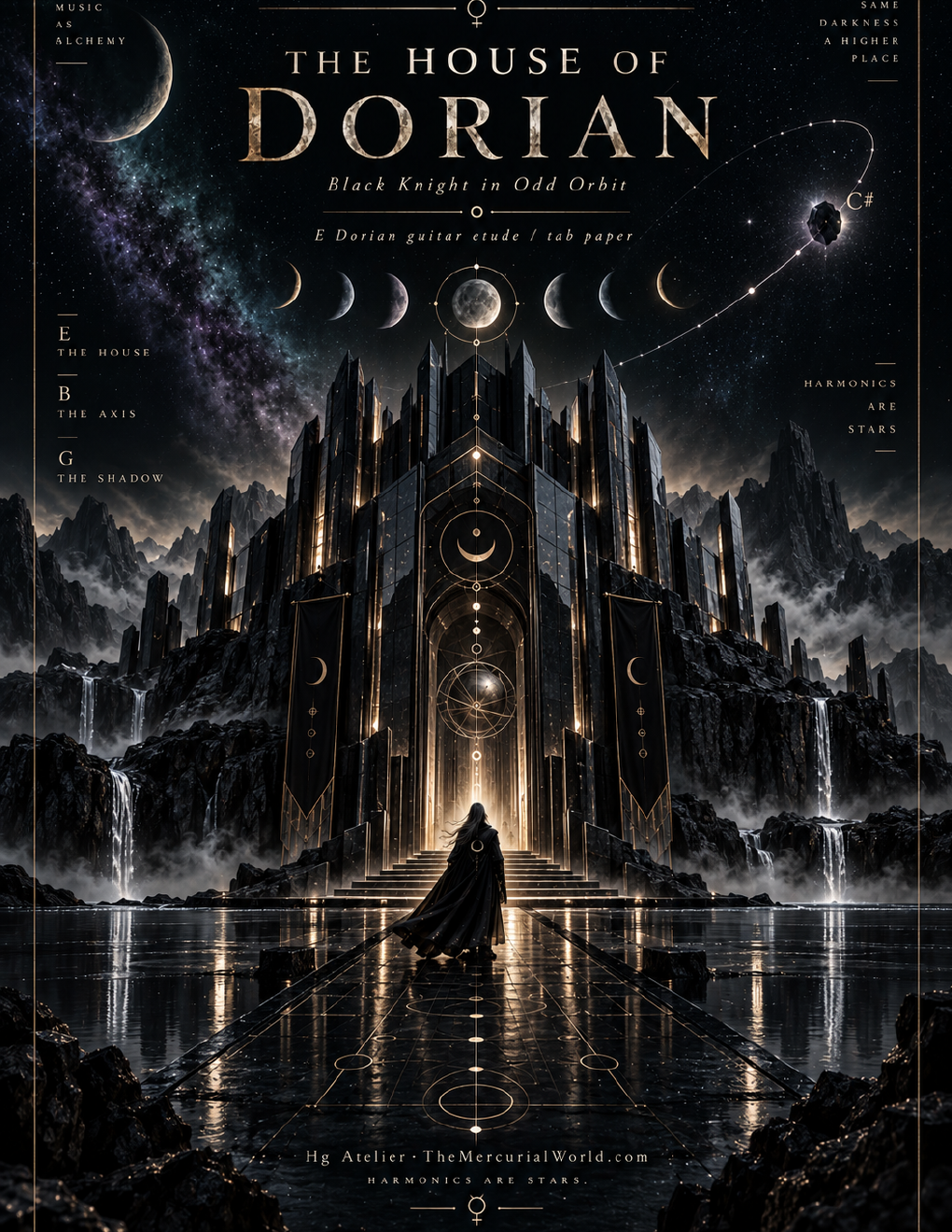
Odd-orbit and Boulder Glass Castle imagery belongs here as performance mythology: a stage language for the music, not a claim about the physical world.